Remember that time I swung through the drive-thru after a grueling workday, craving a juicy burger and fries? It hit the spot in the moment, but an hour later, I felt like a balloon ready to pop. That’s the sneaky side of fast food—it’s quick and tasty, but your body pays the price. In this deep dive, we’ll unpack exactly what happens when you indulge in that meal, from the first bite to potential long-term fallout. Drawing from my own slip-ups and what experts say, let’s explore how these convenient eats mess with everything from your gut to your mood, and why moderation might just save the day.

This infographic shows how fast food impacts various body systems, from the brain to the bones.
The Immediate Aftermath: Short-Term Effects of a Fast Food Meal
Grabbing a fast food combo might seem harmless, but your body reacts almost right away in ways that can leave you sluggish or uncomfortable. High in refined carbs, sugars, and sodium, these meals trigger quick changes in blood sugar and digestion that most folks brush off as just “feeling full.” Yet, ignoring these signals over time adds up, turning a simple lunch into a sneaky health saboteur.
Blood Sugar Spikes and Crashes
That sugary soda and carb-loaded bun cause a rapid rise in glucose, prompting your pancreas to pump out insulin like it’s putting out a fire. For me, this meant a burst of energy followed by a total crash, leaving me zoning out at my desk. In healthy people, levels normalize quickly, but repeated hits can strain the system, hinting at bigger issues down the road.
Bloating and Digestive Discomfort
Ever feel puffy after salty fries? High sodium makes your body hold onto water, leading to that swollen, uncomfortable feeling in your belly or even your fingers. I once skipped the gym because I felt too bloated after a late-night taco run—it was a wake-up call. This puffiness usually fades in a day, but it disrupts your routine and hints at how processed foods overload your kidneys.
Inflammation Flare-Ups
Just one greasy meal can ramp up inflammation, especially if you’re prone to conditions like asthma. The saturated fats irritate airways and tissues, making breathing a bit tougher for a while. Picture your body as a car—fast food is like cheap gas that clogs the engine temporarily, but keep using it, and repairs get costly.
Long-Term Consequences: When Fast Food Becomes a Habit
If fast food sneaks into your weekly routine, the effects compound like interest on a bad loan, hitting your weight, heart, and even brain. I’ve seen friends battle weight gain from years of quick lunches, and it’s no joke how these meals chip away at overall health. Shifting to home-cooked options made a world of difference for me, proving small changes prevent big problems.
Weight Gain and Obesity Risks
Those extra calories from oversized portions add up fast, often leading to unintended pounds that strain your joints and organs. In my early twenties, relying on drive-thrus packed on 15 pounds before I noticed—it’s easy when the food tastes so good. Over time, this boosts obesity odds, linking to everything from joint pain to sleep issues.
Heart Health Under Siege
Trans fats and sodium team up to raise bad cholesterol and blood pressure, setting the stage for heart disease or stroke. A buddy of mine ignored warnings until a scare at 40—his fast food habit was the culprit. Long-term, vessels harden, making every heartbeat work harder, but cutting back can reverse some damage.
Mental Health Dips
Surprisingly, junky meals mess with your mood by skimping on nutrients that fight depression. I felt more irritable during my fast food phase, like a fog I couldn’t shake. Studies show links to anxiety and lower energy, as processed foods disrupt brain chemicals over months or years.
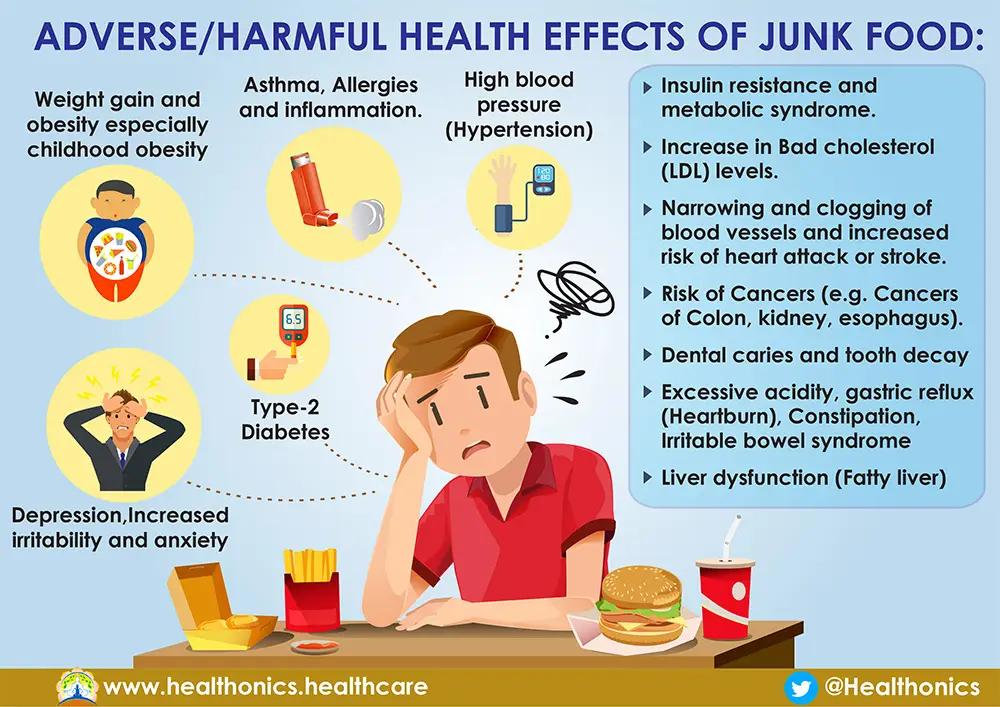
Visual breakdown of junk food harms, including heart risks and metabolic issues.
How Fast Food Impacts Specific Body Systems
Fast food doesn’t discriminate—it hits multiple systems, from your gut to your skin, often in interconnected ways. Based on what I’ve learned from tweaking my diet, balancing nutrients is key to keeping everything running smoothly. Let’s break it down to see why that burger affects more than just your waistline.
Digestive System Strain
Low fiber means slower digestion, leading to constipation or worse over time. My irregular habits improved once I swapped fries for salads—fiber keeps things moving. Chronic issues like diverticulitis can arise, making meals a chore instead of a joy.
Respiratory Challenges
Extra weight from calories pressures lungs, causing shortness of breath during simple tasks. I huffed up stairs more than I’d admit until I lightened my load. For asthmatics, inflammation worsens symptoms, turning a meal into a trigger.
Skin and Dental Woes
Sugary, fatty foods fuel acne and erode tooth enamel with acids. After ditching sodas, my skin cleared up noticeably—it’s like your face rebels against the junk. Cavities sneak in too, as bacteria thrive on those carbs.
Comparing Fast Food to Home-Cooked Meals
Switching from fast food to homemade isn’t just healthier—it’s a game-changer for energy and wallet. Here’s a side-by-side look at how they stack up, based on typical options like a burger meal versus a grilled chicken salad.
| Aspect | Fast Food Meal (e.g., Burger Combo) | Home-Cooked Alternative (e.g., Grilled Chicken Salad) |
|---|---|---|
| Calories | 1,200+ (high from fats and sugars) | 500-700 (balanced with veggies and protein) |
| Sodium | 1,500mg+ (bloating risk) | 300-500mg (natural seasoning) |
| Fiber | Low (2-5g, poor digestion) | High (10g+, aids gut health) |
| Nutrients | Minimal vitamins/minerals | Rich in antioxidants, supports immunity |
| Cost per Serving | $8-12 (convenient but adds up) | $4-6 (fresh ingredients, customizable) |
This table shows why prepping at home wins for long-term wellness—it’s nourishing without the hidden harms.
Pros and Cons of Occasional Fast Food
Sure, fast food has its place, like road trips or busy nights, but weighing the ups and downs helps keep it in check.
Pros:
- Quick and convenient for on-the-go lifestyles.
- Affordable options for tight budgets.
- Comforting flavors that boost mood temporarily.
- Some chains now offer healthier tweaks, like salads.
Cons:
- Loaded with hidden calories leading to weight creep.
- High sodium and fats spike health risks.
- Lacks fiber, causing digestive slowdowns.
- Can foster cravings, making healthy eating harder.
In my experience, treating it as a rare treat keeps the pros shining without the cons taking over.
People Also Ask
Diving into common queries from Google searches, these questions pop up often when folks wonder about fast food’s toll. I’ll tackle them with straight answers based on real insights.
What Are the Negative Effects of Fast Food on the Body?
Fast food packs on weight, spikes blood sugar, and inflames tissues, leading to issues like diabetes and heart problems over time. Short-term, expect bloating and fatigue; long-term, it’s obesity and mood dips.
How Does Fast Food Affect Your Body Immediately?
Right after eating, refined carbs cause blood sugar surges, while sodium leads to water retention and puffiness. You might feel energized at first, then crash hard.
What Happens If You Eat Fast Food Every Day?
Daily intake ramps up risks for chronic diseases, poor digestion, and mental fog. Weight gain becomes inevitable, straining your heart and joints.
Is Fast Food Bad for Your Mental Health?
Yes, nutrient-poor meals link to higher depression and anxiety rates by disrupting brain balance. Swapping for whole foods lifted my spirits noticeably.
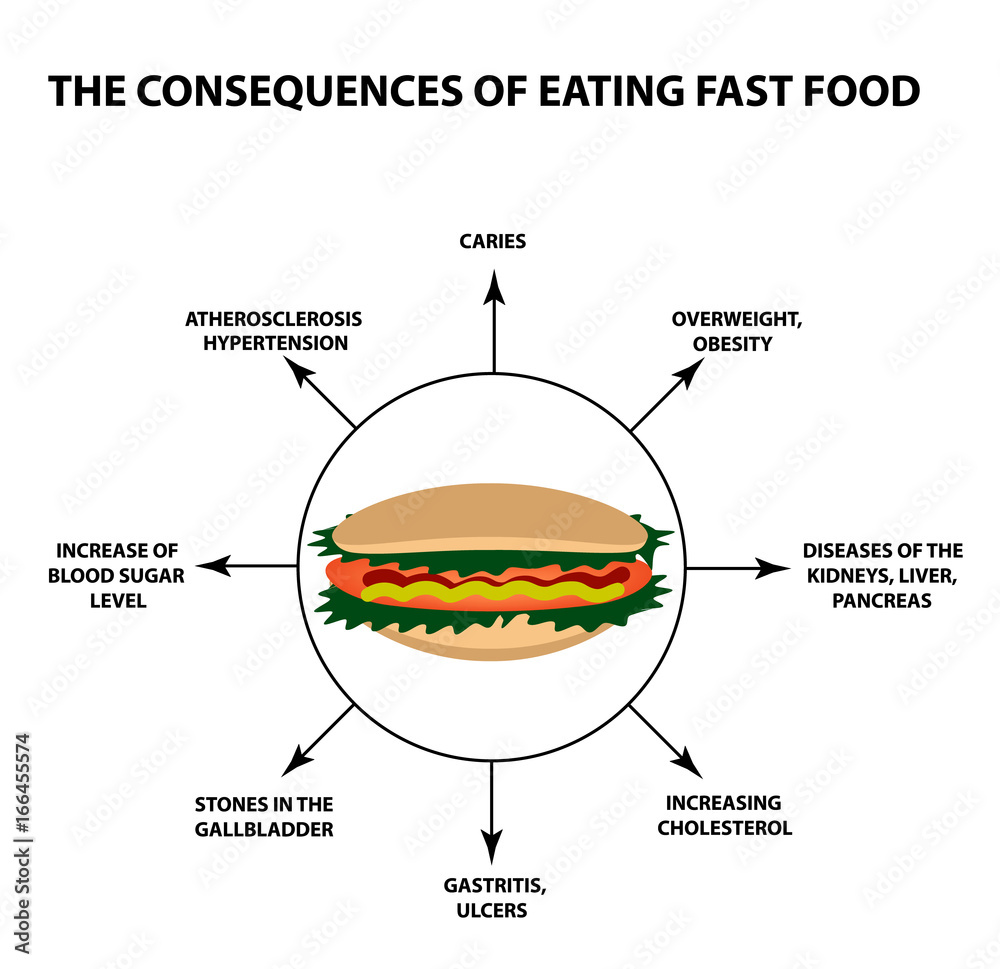
Simple diagram highlighting fast food consequences like hypertension and obesity.
Where to Get Healthier Fast Food Alternatives
Craving convenience without the guilt? Chains like Chipotle or Sweetgreen offer customizable bowls with fresh veggies and lean proteins—head to their apps or sites for locations. For home swaps, grocery stores like Whole Foods stock quick-prep kits; check their deli for salads under 500 calories. Apps like MyFitnessPal guide you to better choices nearby.
Best Tools for Tracking Fast Food Impact
To monitor how these meals affect you, try apps like Lose It! or Cronometer—they scan barcodes and log nutrients, flagging high-sodium days. Wearables like Fitbit track energy dips post-meal, while journals like Habitica turn healthy eating into a fun game. For pros, consult a dietitian via Teladoc for personalized plans.
FAQ
How quickly does fast food affect your blood pressure?
Within hours, high sodium can temporarily elevate it, especially if you’re sensitive—monitor with a home cuff to catch patterns.
Can one fast food meal ruin your diet?
No, but it adds extra calories; balance with veggies the next day. I bounce back by walking it off and hydrating.
What are signs you’re eating too much fast food?
Watch for constant fatigue, skin breakouts, or weight fluctuations—my clue was always feeling bloated mid-afternoon.
How can I make fast food healthier?
Opt for grilled over fried, skip soda for water, and add sides like apples. Small tweaks like that kept me sane during busy weeks.
Does fast food affect kids differently?
Yes, it can stunt growth with nutrient gaps and spike obesity risks early—limit to once a week, as I do with my family.
In wrapping up, fast food’s allure is real, but understanding its body blows empowers better choices. From my burger regrets to healthier habits, it’s about balance—your body will thank you. For more tips, explore our guide to healthy eating.
Leave a Reply